
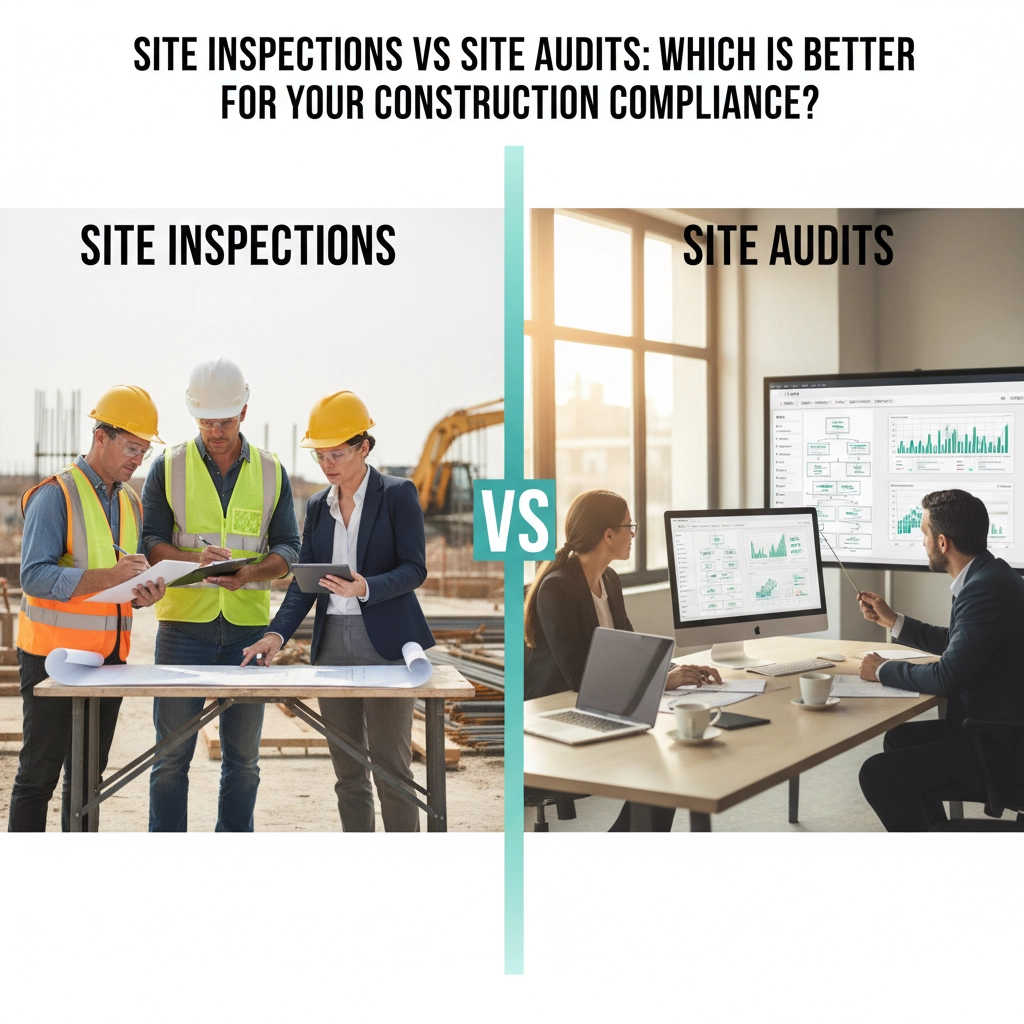
Site Inspections Vs Site Audits: Which Is Better For Your Construction Compliance?
If you’re managing a construction site, you’ve probably heard the terms “site inspection” and “site audit” thrown around. But what’s the difference, and which one does your project actually need for proper safety compliance?
The truth is, both site inspections and site audits play crucial roles in workplace health and safety, but they serve very different purposes. Understanding when to use each approach can save you time, money, and most importantly, keep your workers safe.
As a construction manager, choosing between these two approaches isn’t really about picking one over the other – it’s about understanding how they work together to create a comprehensive safety management system that meets compliance regulations.
What Are Site Inspections?
Site inspections are your day-to-day safety checks – think of them as the regular health check-ups for your construction site. These are planned, structured reviews of work areas, people, equipment, and materials to confirm everything is safe, compliant, and running smoothly.
During a typical site inspection, someone walks through the construction site, physically examines different areas, and notes any issues related to safety and quality. They’ll document findings with photos and assign corrective actions that need immediate attention.
How Site Inspections Work
Site inspections are typically carried out by on-site safety officers, supervisors, or team leaders who are familiar with daily operations. The focus is on immediate hazards – things like:
- Proper use of personal protective equipment (PPE)
- Safe operation of machinery and tools
- Housekeeping and site cleanliness
- Compliance with safety procedures
- Worker behavior and adherence to safety rules
The process is relatively quick and straightforward. A daily walk-through might take just 10-15 minutes, while a more thorough weekly inspection could take 30-60 minutes.
When Should You Conduct Site Inspections?
The frequency of site inspections depends on your project’s risk level and complexity:
- Daily inspections: Essential for high-risk activities or busy sites
- Weekly inspections: Standard for most construction projects
- Event-based inspections: Triggered by incidents, weather changes, or new work phases
Most health and safety consultants recommend at least weekly formal inspections by the site manager, with monthly reviews by dedicated health and safety personnel.
What Are Site Audits?
Site audits are the comprehensive annual check-ups of your entire safety management system. While inspections focus on immediate hazards, audits evaluate whether your overall approach to construction compliance is working effectively.
Think of a site audit as taking a step back to look at the bigger picture. Instead of asking “Is this scaffold safe right now?”, an audit asks “Is our scaffolding management system ensuring consistent safety across all our projects?”
How Site Audits Work
Site audits are usually conducted by independent auditors or external health and safety training specialists to provide an unbiased assessment. Before starting, auditors review existing safety records, incident reports, and previous audit findings to understand the site’s safety history.
During the audit process, they examine:
- Documentation like safety training records and incident reports
- Compliance with regulatory standards and internal policies
- Risk assessment procedures and effectiveness
- Safety management systems and processes
- Training programs and competency records
The audit also includes a comprehensive risk assessment to identify potential hazards, evaluate the likelihood and severity of risks, and recommend improved control measures.
When Should You Conduct Site Audits?
Site audits are typically less frequent than inspections but more thorough:
- Quarterly audits: For large, complex projects
- Annual audits: Standard for most construction companies
- Project-specific audits: At key milestones or project completion
- Regulatory audits: Required by certain compliance regulations
Site Inspections vs Site Audits: The Key Differences
| Aspect | Site Inspections | Site Audits |
|---|---|---|
| Purpose | Identify immediate hazards | Evaluate entire safety system |
| Frequency | Daily/weekly | Monthly/quarterly/annually |
| Duration | 10-60 minutes | Several hours to days |
| Conducted by | On-site supervisors | Independent auditors |
| Scope | Specific areas or activities | Whole project/company systems |
| Focus | Real-time safety issues | Systemic compliance gaps |
| Documentation | Photos, notes, action lists | Comprehensive reports |
| Cost | Lower (internal resources) | Higher (external expertise) |
Which Approach Is Better for Your Construction Compliance?
The answer isn’t one or the other – it’s both. Site inspections and site audits work together to create a robust workplace health and safety system.
Choose Site Inspections When You Need:
- Immediate hazard identification: Spotting and fixing problems before they cause accidents
- Day-to-day compliance monitoring: Ensuring workers follow safety procedures consistently
- Cost-effective safety management: Using internal resources for regular safety checks
- Real-time feedback: Providing immediate coaching and correction to workers
- High-frequency monitoring: Keeping safety visible and prioritized daily
Choose Site Audits When You Need:
- Comprehensive compliance verification: Proving to clients and regulators that your systems work
- Independent assessment: Getting an unbiased view of your safety performance
- Systemic improvement identification: Finding gaps in your safety management approach
- Legal protection: Demonstrating due diligence in safety management
- Strategic planning: Using audit findings to improve safety training and procedures
The Smart Approach: Combining Both Methods
The most effective construction compliance strategies use both site inspections and site audits regularly. Here’s how to make them work together:
Start with regular inspections to maintain day-to-day safety standards and catch immediate hazards. Use standardized checklists and digital tools to make the process efficient and consistent.
Schedule periodic audits to verify that your inspection system is actually working and to identify improvements needed in your overall safety management approach.
Use audit findings to improve inspections by updating checklists, training inspectors better, and focusing on areas where audits reveal weaknesses.
How Impact Compliance Solutions Can Help
At Impact Compliance Solutions, we understand that every construction project has unique safety challenges. We don’t believe in one-size-fits-all approaches to construction compliance.
Our health and safety consultants can help you develop an integrated inspection and audit program that fits your specific needs:
- Customized inspection programs: We’ll help you create inspection checklists and procedures tailored to your project types and risk levels
- Independent safety audits: Our certified auditors provide unbiased assessments of your safety management systems
- Health and safety training: We offer comprehensive training programs to ensure your team knows how to conduct effective inspections
- Compliance support: We stay current with compliance regulations and help you navigate changing requirements
Whether you need help setting up daily inspection routines or require comprehensive safety audits for regulatory compliance, our team has the expertise to support your construction compliance goals.
Making the Right Choice for Your Project
When deciding how to structure your safety compliance approach, consider these factors:
Project complexity and duration: Larger, longer projects typically need more frequent inspections and regular audits.
Risk level: High-risk activities require more intensive monitoring through both inspections and audits.
Regulatory requirements: Some clients or regulations specifically require certain types of inspections or audits.
Available resources: Consider both your internal capacity for inspections and budget for external audits.
Company size and experience: Newer companies might benefit more from external audit support, while experienced teams might focus on improving internal inspection processes.
Remember, the goal isn’t just to meet compliance regulations – it’s to create a safety culture that genuinely protects your workers and supports your business success.
Both site inspections and site audits are valuable tools in achieving this goal. The key is understanding when and how to use each approach effectively. By combining regular inspections for immediate hazard management with periodic audits for system verification, you’ll create a comprehensive approach to construction compliance that keeps your projects safe, compliant, and successful.
If you’re ready to improve your construction compliance approach, Impact Compliance Solutions is here to help you develop the right combination of inspections, audits, and health and safety training for your specific needs.