
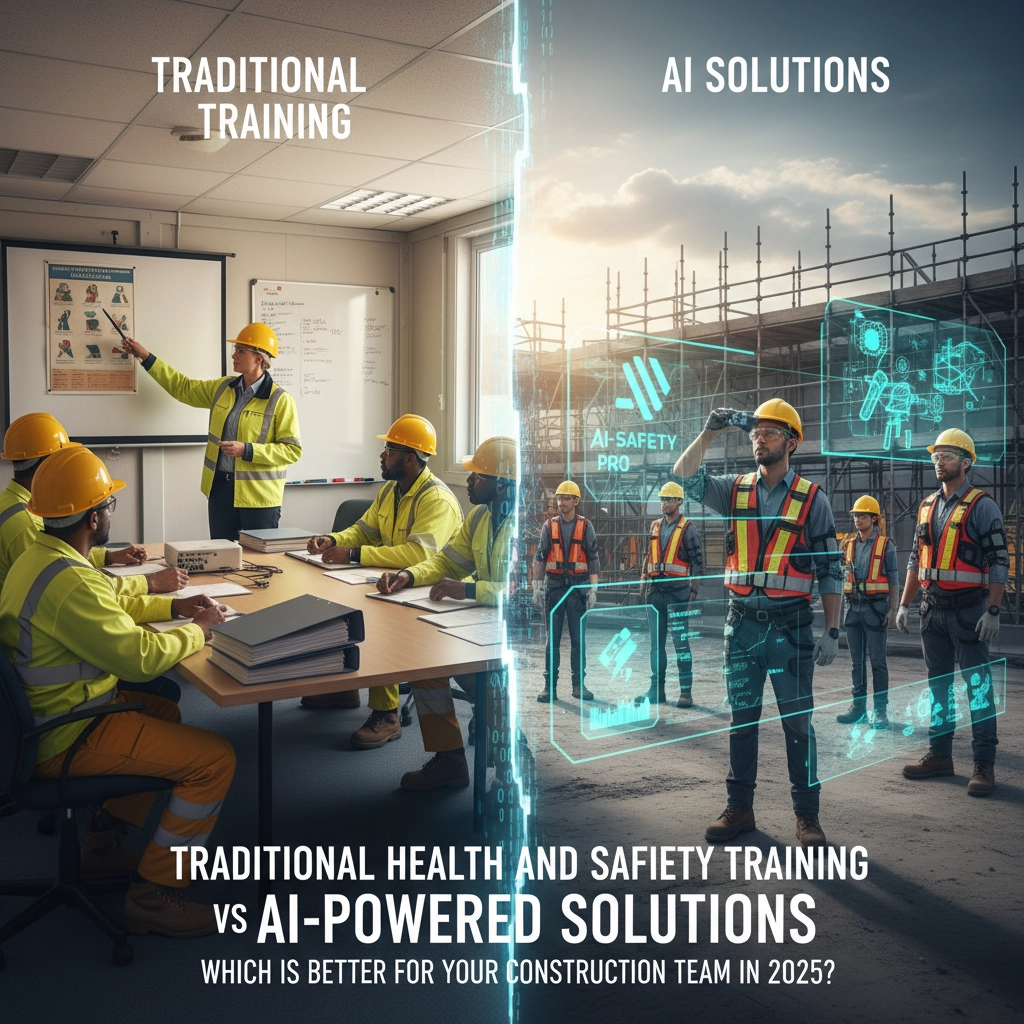
Traditional Health and Safety Training vs AI-Powered Solutions: Which Is Better for Your Construction Team in 2025?
The construction industry is at a crossroads when it comes to health and safety training. While traditional classroom-based sessions have been the backbone of workplace health and safety for decades, AI-powered solutions are increasingly making their mark. But which approach truly serves your construction team better in 2025?
As someone who’s spent years in the construction industry, I’ve seen both approaches in action. The truth is, there’s no one-size-fits-all answer, but there are clear advantages and disadvantages to each method that every construction manager needs to understand.
Understanding Traditional Health and Safety Training
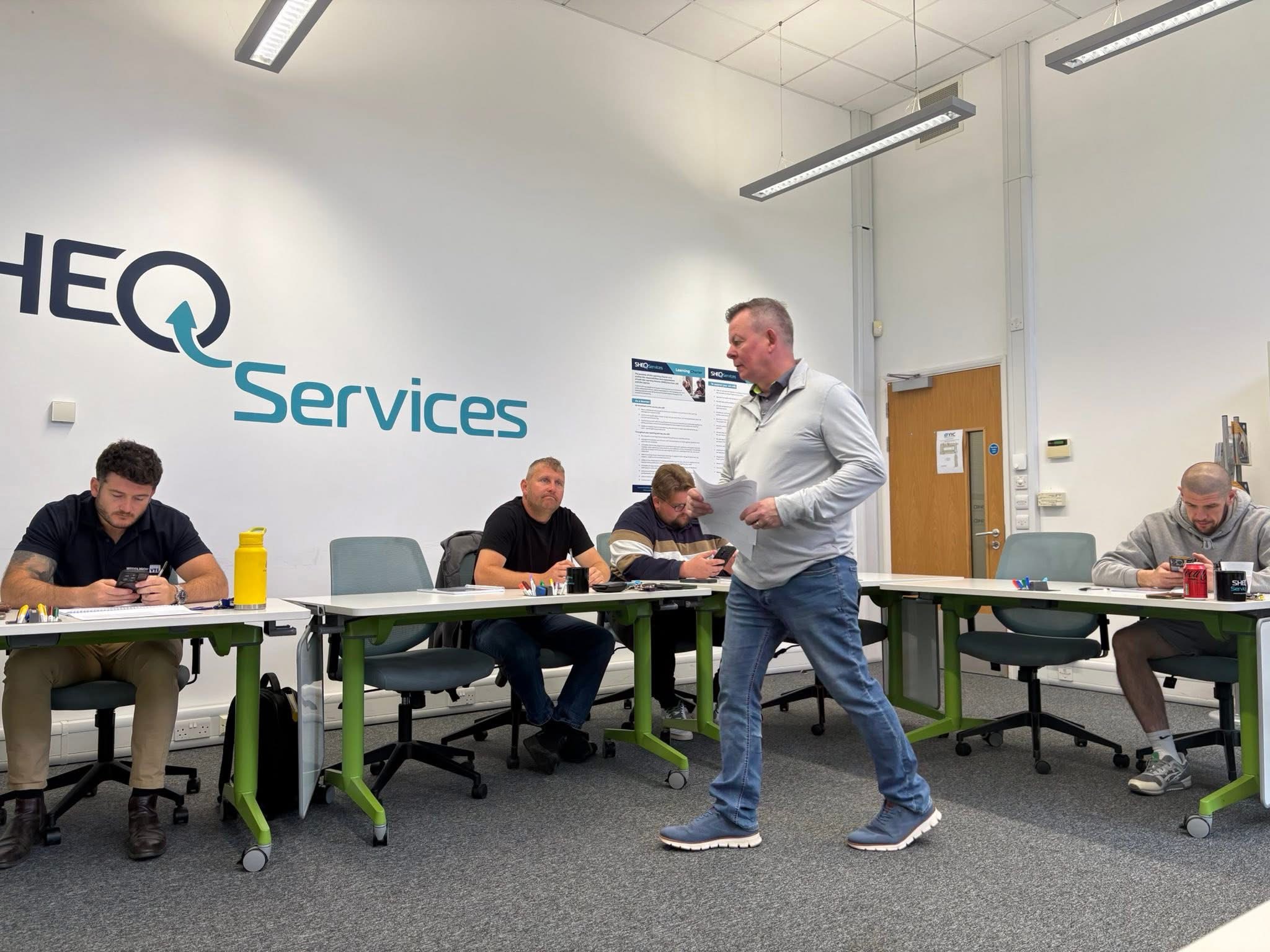
Traditional health and safety training typically involves face-to-face classroom sessions, hands-on demonstrations, and instructor-led discussions. Think of your standard CSCS courses, toolbox talks, and site inductions – these are the bread and butter of construction compliance training.
This approach has been the industry standard for good reason. Instructors can adapt their delivery based on participants’ reactions, answer specific questions about real site situations, and create that crucial human connection that helps information stick. When a trainer explains fall protection systems while standing next to actual scaffolding, there’s an immediacy and relevance that’s hard to replicate digitally.
The format allows for group discussions where experienced workers share war stories and lessons learned. These conversations often prove more valuable than the official curriculum, as workers learn from each other’s mistakes and near-misses.
How AI-Powered Solutions Work in Construction
AI-powered health and safety training uses technology to deliver personalised, adaptive learning experiences. These systems can include virtual reality simulations, interactive modules that adjust based on your responses, and predictive analytics that identify knowledge gaps before they become safety risks.
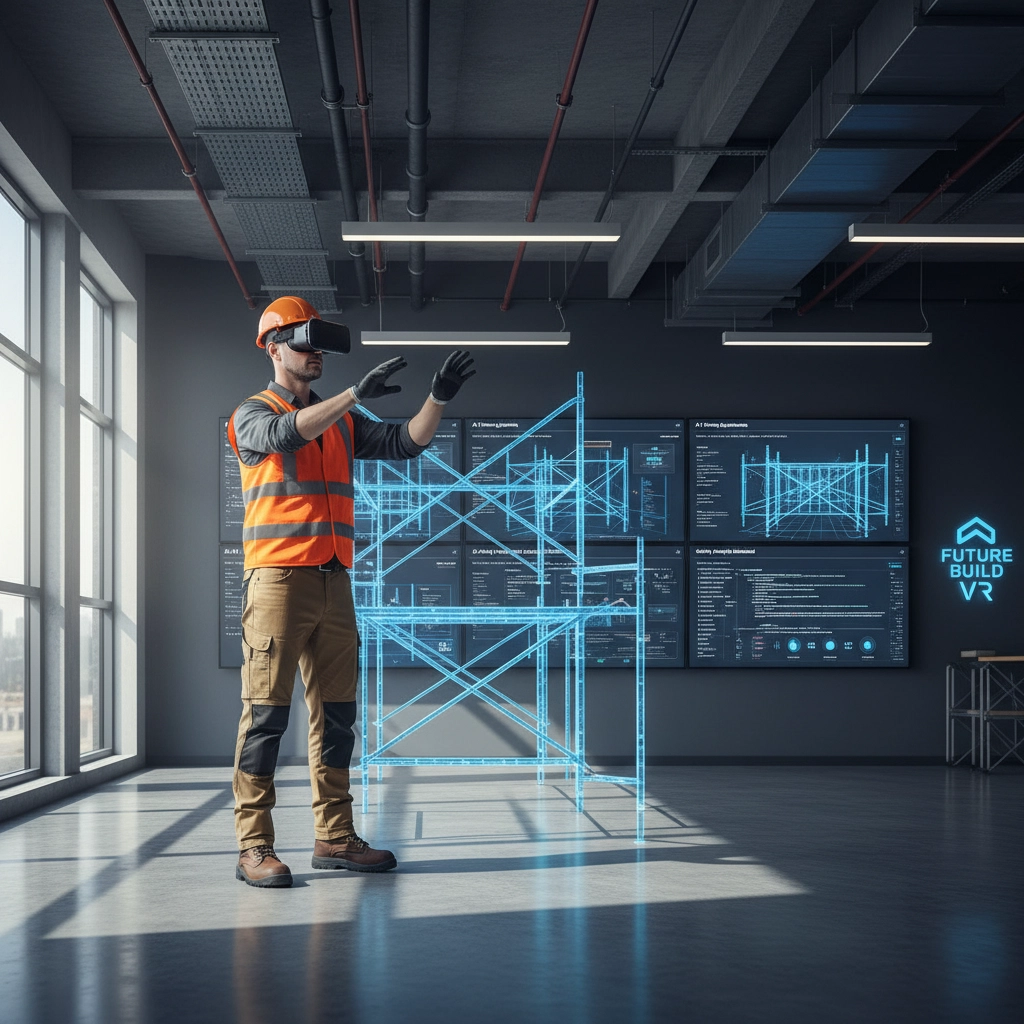
For example, a worker might complete a VR simulation of working at height, where the system monitors their decision-making process and provides instant feedback. If they consistently forget to check their harness connections, the AI identifies this pattern and provides additional targeted training on that specific skill.
Some platforms use machine learning to analyse incident data and create training scenarios based on the most common causes of accidents on similar sites. This means your team trains on hazards they’re most likely to encounter, rather than generic scenarios.
Comparing the Approaches: Pros and Cons
Traditional Training Advantages
Human Connection and Engagement
Nothing beats face-to-face interaction when it comes to building safety culture. A skilled instructor can read the room, crack a joke to lighten the mood, or share a powerful story that drives home the importance of safety. This personal touch often makes the difference between training that’s forgotten by lunchtime and training that genuinely changes behaviour.
Immediate Clarification
When someone doesn’t understand a regulation or procedure, they can ask questions immediately and get clarification. This real-time problem-solving prevents confusion that could lead to unsafe practices later.
Hands-On Practice
Physical demonstrations with actual equipment allow workers to practice skills they’ll use on site. There’s value in feeling the weight of safety equipment, understanding how different materials behave, and getting muscle memory for critical procedures.
Compliance Assurance
Traditional training has clear documentation trails that satisfy regulatory requirements. When an HSE inspector asks about your training records, a signed attendance sheet and certification from an approved provider gives clear evidence of compliance.
Traditional Training Disadvantages
Scheduling Challenges
Getting everyone together at the same time is increasingly difficult, especially with shift patterns and project deadlines. This often leads to rushed sessions or incomplete participation.
One-Size-Fits-All Delivery
The same content gets delivered to everyone regardless of their experience level, learning style, or specific role requirements. A seasoned site manager sits through the same basic safety talk as a new apprentice.
Limited Retention Testing
Most traditional training relies on end-of-session tests that don’t measure long-term retention or real-world application of knowledge.
Higher Costs
Factor in instructor fees, venue costs, worker downtime, and travel expenses, and traditional training can become expensive quickly.
AI-Powered Solutions Advantages
Personalised Learning Paths
AI systems can adapt content based on individual performance, focusing extra attention on areas where each worker struggles most. This targeted approach can be more efficient than broad-brush training approaches.
Flexible Scheduling
Workers can complete training modules during downtime, between shifts, or even at home. This flexibility reduces disruption to project schedules while ensuring everyone gets consistent training.
Consistent Quality
Every worker receives identical information delivered to the same standard. There’s no variation in quality based on instructor experience or energy levels.
Data-Driven Insights
AI systems generate detailed analytics about learning patterns, knowledge gaps, and areas of concern across your workforce. This data helps you make informed decisions about additional training needs.
Cost Efficiency
Once implemented, AI systems can train unlimited numbers of workers without additional instructor costs, making them particularly attractive for large teams or companies with high turnover.
AI-Powered Solutions Disadvantages
Technology Barriers
Not all workers are comfortable with digital platforms, and technical difficulties can disrupt learning. Internet connectivity issues on remote sites can make AI-powered training impossible.
Lack of Human Interaction
AI systems can’t provide the motivational aspect of human instructors or answer complex questions that require experience and judgment rather than just factual knowledge.
Limited Hands-On Experience
While VR is improving rapidly, it still can’t fully replicate the physical experience of handling safety equipment or working in real-world conditions.
Compliance Uncertainty
While improving, some regulatory bodies haven’t fully embraced AI-powered training for all compliance requirements, potentially creating gaps in your training records.
Real-World Results: What the Data Shows
Construction companies using blended approaches report the best results. Sites that combine AI-powered modules for knowledge transfer with traditional hands-on sessions for practical skills see higher completion rates, better knowledge retention, and improved safety performance.
A recent study of construction sites using purely traditional training showed 73% completion rates for required training, while sites using AI-powered solutions achieved 89% completion. However, traditional training scored higher for practical skill demonstration and real-world application.
The sweet spot seems to be using AI for knowledge-based training (regulations, hazard identification, basic procedures) while keeping traditional methods for hands-on skills (equipment operation, emergency response, practical demonstrations).
Cost Considerations for 2025
Traditional training costs are rising due to instructor fees, venue costs, and the increasing complexity of compliance regulations. A typical site induction for 20 workers might cost £1,500-£2,000 when you factor in all expenses.
AI-powered platforms require significant upfront investment but lower ongoing costs. Annual subscriptions for comprehensive platforms range from £15-£50 per worker, making them cost-effective for larger teams or companies with frequent training needs.
However, cost shouldn’t be the only consideration. The true value lies in preventing accidents, maintaining compliance, and building a strong safety culture – areas where both approaches have merits.
Making the Right Choice for Your Team
The best approach depends on your specific circumstances:
Choose Traditional Training If:
- Your team includes many workers who aren’t comfortable with technology
- You need hands-on practical training for complex procedures
- You have a small, stable workforce where scheduling isn’t a major issue
- Your workers benefit from group discussion and peer learning
Choose AI-Powered Solutions If:
- You have a large, distributed workforce with varying schedules
- You need consistent training delivery across multiple sites
- You want detailed analytics about training effectiveness
- Budget constraints make traditional training prohibitively expensive
Consider a Blended Approach If:
- You want the benefits of both methods
- You have diverse training needs (some knowledge-based, some practical)
- You’re looking to future-proof your training strategy
- You want to optimise both engagement and efficiency
Looking Ahead: The Future of Construction Training
The construction industry is slowly but surely embracing technology, and health and safety training is no exception. AI-powered solutions will likely become more sophisticated, with better VR experiences and more intuitive interfaces that address current limitations.
However, the human element will remain crucial. The most successful companies in 2025 and beyond will be those that thoughtfully combine the efficiency and consistency of AI with the engagement and practical experience that only human instructors can provide.
Rather than seeing this as an either-or decision, smart construction managers are viewing it as an opportunity to create more effective, comprehensive training programs that serve their workers better while meeting all compliance requirements.
The key is understanding your team’s specific needs, being honest about your constraints, and choosing the approach – or combination of approaches – that best serves your workers’ safety and your business objectives. After all, the best health and safety training is the one that actually prevents accidents and gets everyone home safely at the end of the day.